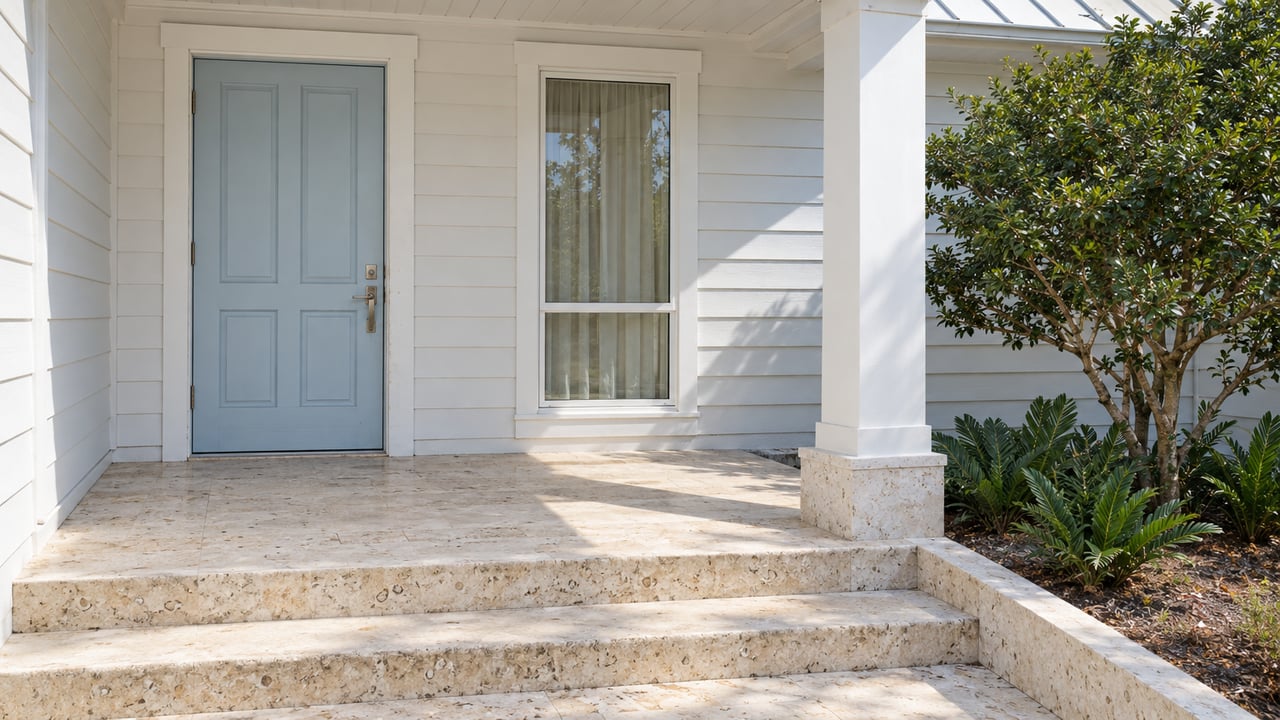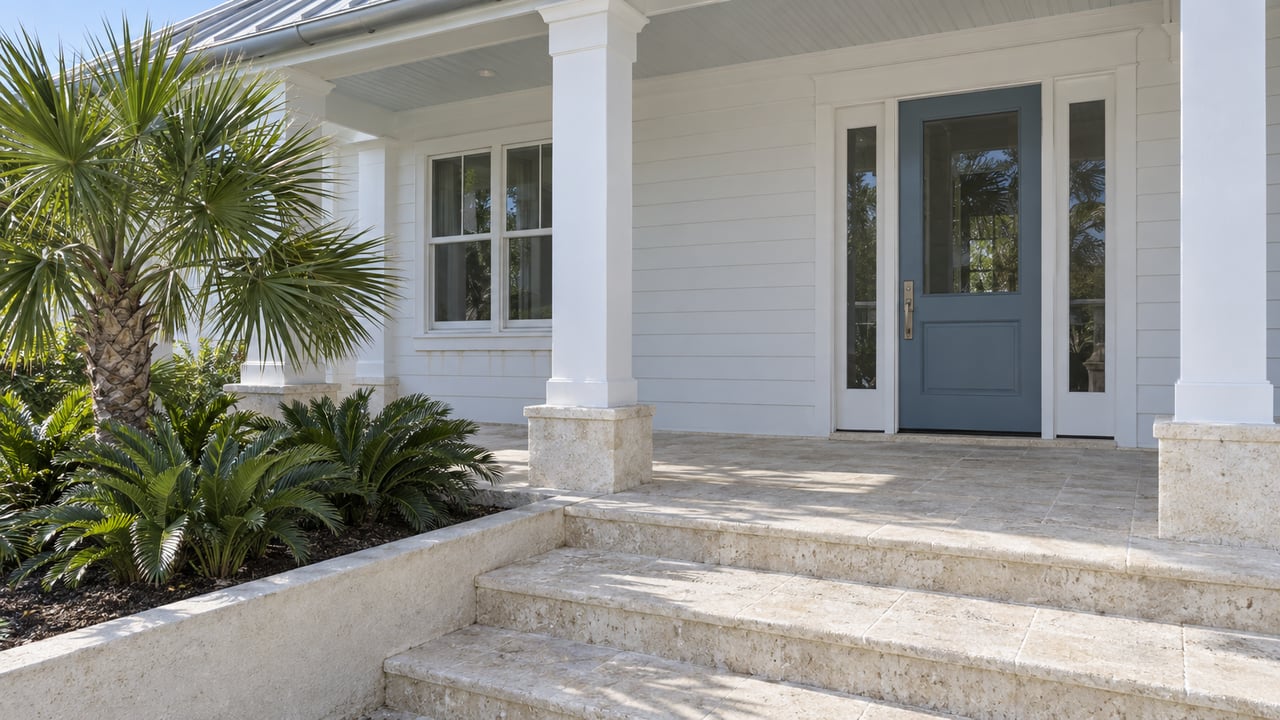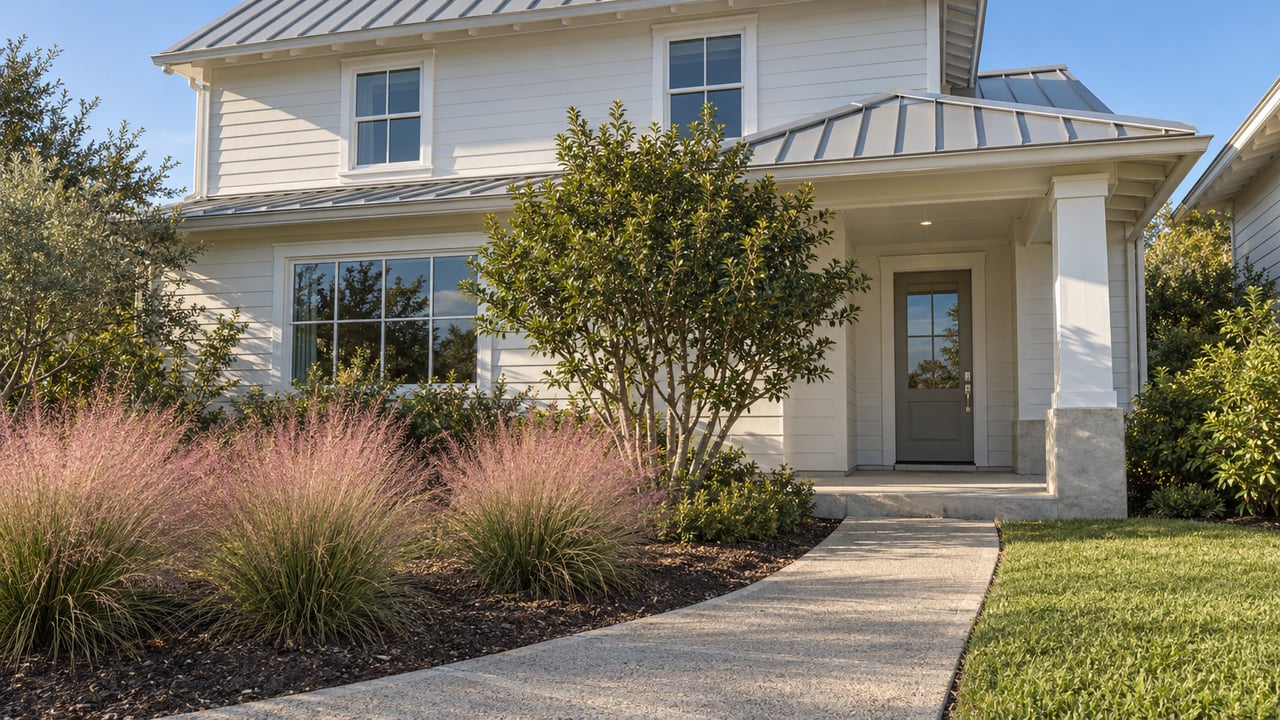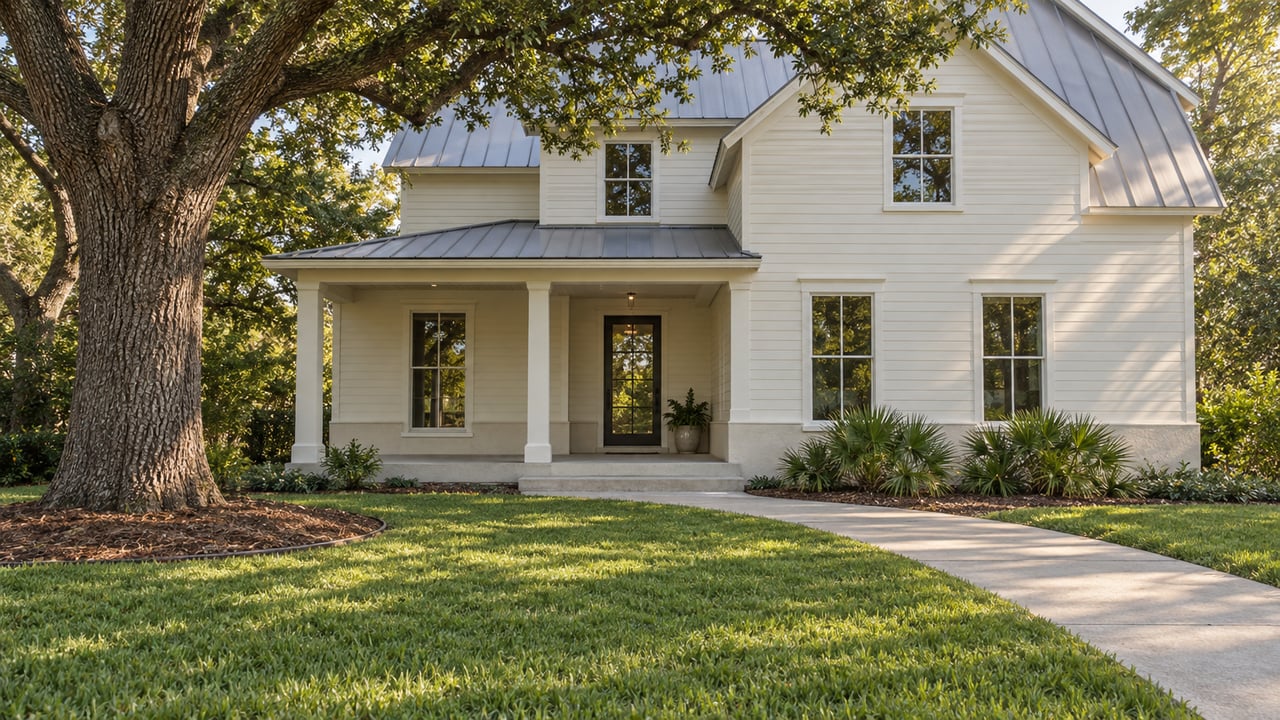
"We're now saying that we're going to deny removal of the tree that should not be removed." Atlantic Beach Mayor Curtis Ford said that to News4JAX after the City Commission voted unanimously on July 13 to tighten the city's tree code.
If you're looking at a lot, a teardown or a major renovation in Atlantic Beach, that sentence changes how you should read the trees on the survey. Under the old rules, a big maritime-forest tree was a cost you could pay. Under the new ones, it can decide where the house goes. The ordinance also left some key details for the Commission to fill in later.
The Oak That Showed What the Old Rules Cost
In January 2026, the City of Atlantic Beach posted a notice about a live oak at 445 West First Street, on a property that backs up to Tide Views Preserve. The trunk measured 60 inches across at breast height. Using a growth factor of four, the City estimated the tree at about 240 years old. The property was part of a parcel that had recently been split into two lots. Because the tree stood in the middle of the site, the City said development wasn't possible with it in place.
The City called the permit "a mandatory administrative formality." The applicant had met every objective standard in the code, so staff had "no legal alternative but to approve." The required mitigation was more than 54 inches of replacement trees, about $9,841.88 paid into the City's Tree Protection Fund, or a mix of the two.
That works out to roughly $182 for each mitigation inch on a tree that had been growing for more than two centuries. Under that code, a buyer could treat even a landmark-sized oak as a budget line. Jacksonville Today covered the removal and the City's explanation in early February. A neighbor who lived next door told News4JAX she was glad the city had taken up the issue.
Six Months From Chainsaw to Ordinance
The new rule came together quickly:
- January 20, 2026: The West First Street oak comes down, according to the photo caption date in Jacksonville Today's coverage.
- January 22: The City posts its explanation of the removal.
- March 2: At a Commission workshop on the tree code, the West First Street oak and the subdivision of that property come up by name.
- June 22: First reading of Ordinance 95-26-128.
- July 13: The Commission passes the ordinance unanimously.
- August 10: A "Tree Protection Code Update (Phase 2)" appears on the Commission agenda under City Manager reports.
- August 21: Municode updates the city's online code and lists Ordinance 95-26-128 among adopted ordinances that have not yet been codified.
Ford called it "the most significant tree ordinance this city has ever really considered."
What Counts as a Landmark Tree Now
The ordinance text defines a landmark tree as a designated maritime species that measures at least 20 inches in diameter at breast height. Ford described the group broadly: "anything from a magnolia to a live oak, pine, cedar, cypress," meaning trees that belong to the island's maritime forest. Invasive and non-local species aren't included.
Landmark protection applies automatically. Atlantic Beach already had a "heritage tree" category, but it generally applied to maritime species of 30 inches or more that the Commission had formally designated. On private property, that designation needed the owner to nominate the tree voluntarily. Landmark status needs no nomination. A tree that crosses the size line for a qualifying species is a regulated landmark tree "in all areas of the city," and the ordinance says its removal "is strongly discouraged."
To remove one, an applicant has to clear these steps:
- A permit. The ordinance requires one for any landmark tree, "notwithstanding any state regulations to the contrary."
- A showing about the site. The applicant must show that construction "cannot occur in any other location on the site," or that removal can't be avoided because of site conditions or design considerations beyond the applicant's control.
- A possible relocation. Before approving a removal, the City can require that the tree be moved at the applicant's sole expense.
- A board decision. The final motion gave approval to the Community Development Board, with appeals to the City Commission. News4JAX reported the same process.
- Restricted planting credit. Replacement trees earn mitigation credit only if they are designated maritime species of at least 4-inch caliper, and City staff must approve the landscape plan first.
Setbacks are where the rules bite hardest. The final motion doubled mitigation fees for protected trees within setbacks. Ford explained the reasoning to News4JAX:
"If you can't build a building in a setback anyways, then why would you allow somebody without any checks and balances to remove trees in setbacks, which are indicated and expected to be green spaces?"
He also said the ordinance is "not intended to make it onerous to build on your property" and that the city wants to pay attention to individual property rights.
The Price Tag the Ordinance Left Blank
This is where buyers need to be careful. The ordinance says the mitigation rate for an authorized landmark removal, and the rate for one removed without a permit, will be "determined by the City Commission." The July 13 motion referred to a staff recommendation on a mitigation ratio. The City Attorney then clarified that staff hadn't made one. Some commissioners had suggested fees, and the staff report included a ratio table.
Before the vote, one member of the dais went on record about what the ordinance still lacked. The speaker called it "very not baked." On how long approval might take: "I suspect it's more than a couple of months. If there's a tree in question, it could be many months." The speaker also asked what relocating a tree would really cost and said mitigation fees needed to be revisited, calling the setback doubling "just a quick thing today."
For a buyer, that means two unknowns, time and money, landing at the same point in the deal. A contract on a lot with a 20-inch-plus magnolia or oak near the planned footprint could depend on a board hearing whose timing nobody can promise and a mitigation figure the adopted text left for the Commission to determine. The $9,841.88 from West First Street was calculated under the rules that this ordinance replaced, so it isn't a useful benchmark anymore.
The Rest of the Code Still Applies
Landmark status sits on top of the existing Chapter 23 rules, which are broader than many buyers expect. Under the City's published Chapter 23 text, trees on private property are regulated starting at 8 inches in diameter, except species on the prohibited list. Mitigation ratios depend on whether the lot is vacant, developed or new construction, and on tree size and heritage status. "New construction" also covers a lot where the house has been demolished but no replacement building permit has been issued yet. That pulls most teardowns into that category.
The paperwork is set out in the City's application materials. Applicants submit through BSA Online with a tree inventory, site plan and tree worksheet. Staff inspect the site and calculate mitigation. A mitigation plan is due within 30 days of those calculations. Payment is due within seven days of permit issuance, and replacement planting must be finished within 30 days or before the certificate of occupancy. The City's July 2026 fee worksheet lists a residential tree removal permit at $325. An older City summary listed $125 per lot.
State law also applies. Florida Statute 163.045 bars local governments from requiring a permit, fee or mitigation to remove a tree on qualifying residential property when the owner has documentation from an ISA-certified arborist or a Florida-licensed landscape architect showing the tree presents an unacceptable risk. The new Atlantic Beach ordinance requires a landmark removal permit "notwithstanding any state regulations to the contrary." How those two provisions work together on a particular property is a question for a Florida real estate attorney.
Questions to Settle Before Your Inspection Period Ends
- Which trees on the lot are maritime species measuring 20 inches or more at breast height? An arborist's tree inventory answers this in a day. A listing photo won't.
- Where do those trees sit relative to the setbacks and the footprint you have in mind? Trees in setbacks carry doubled mitigation fees under the July motion.
- What has the Commission adopted since July 13? Ask the City's Community Development Department whether landmark mitigation rates or Phase 2 changes have been set, and whether any landmark removals have gone before the Community Development Board.
- Does the property have a permit history? The City posted the West First Street permit file on its public WebLink records system, and earlier tree permits for other addresses may be searchable there too.
- Does your timeline allow for a hearing? If your financing, builder or lease-end date depends on a fast start, plan for a board review that could take months.
- If you're selling, do you know your trees? A buyer's builder will measure them. Having that information ready helps you price a lot that may be harder to build on than its neighbors.
This post is general information about a local ordinance, not legal, tax or financial advice. Please confirm how these rules apply to a specific property with the City, a licensed arborist and a Florida real estate attorney.
Quick Answers
Does the ordinance only apply to new construction? The ordinance makes landmark trees regulated "in all areas of the city" and requires a permit to remove any of them. That reaches renovation projects and existing homes, as well as vacant lots.
Does a big pine count, or only live oaks? According to Ford, the list includes pine, cedar, cypress and magnolia along with live oak, as long as the species belongs to the local maritime forest.
Can I just pay into the Tree Protection Fund instead? For landmark trees, a payment no longer secures approval by itself. Ford told News4JAX the city is changing the old option of paying into the tree fund or planting replacements in exchange for removal.
If a lot you love in Atlantic Beach has a big magnolia or live oak near the spot where your plans put the house, look at that before you make your offer. Bella can walk the property with you, help you put together your arborist and City questions, and build the tree review into your contract timeline. Reach out to The Real Jacksonville to Schedule a Consultation.